 Repostit Team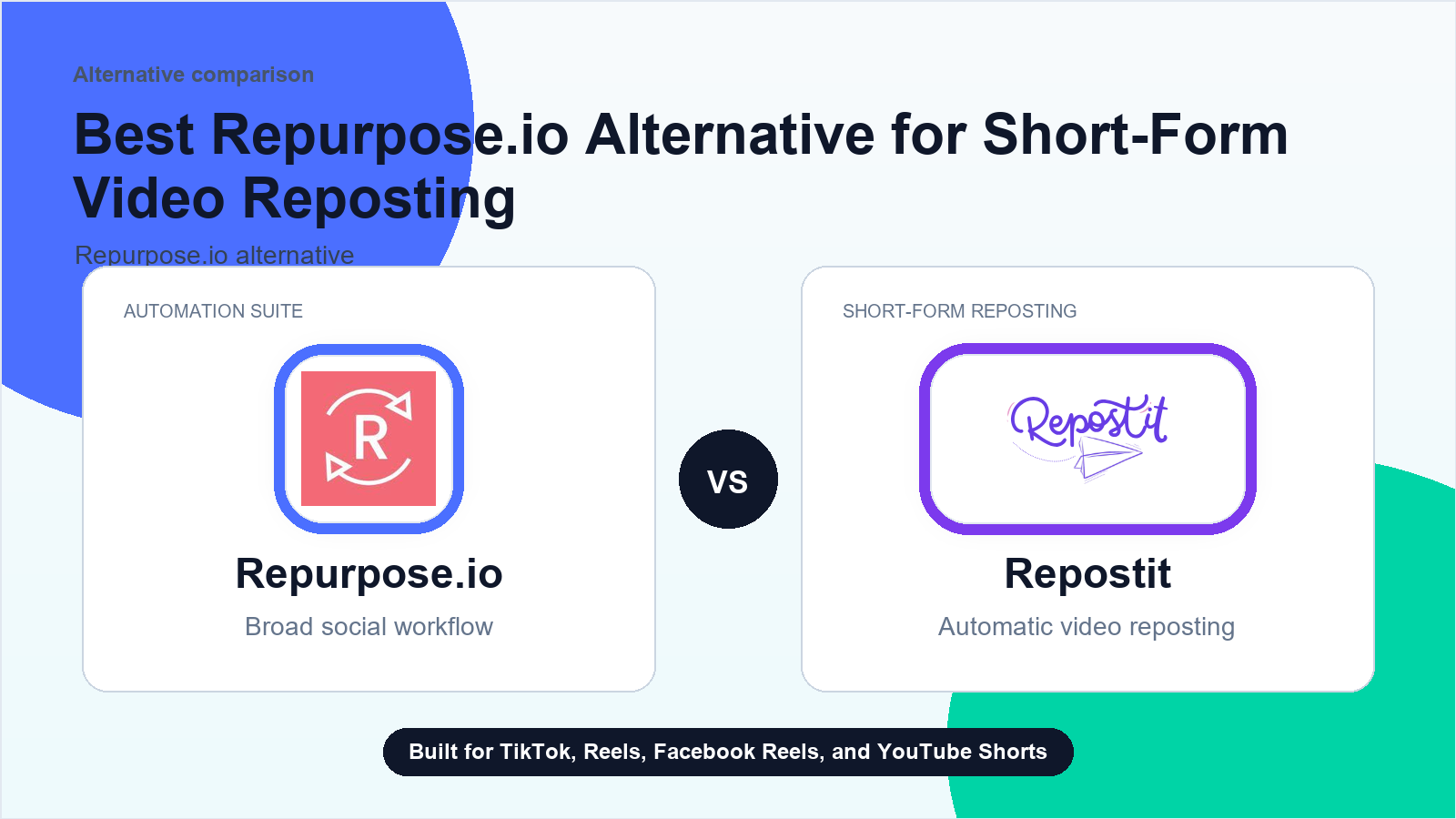
Start with the workflow, not the frustration
A product-tagging request is a native commerce workflow, not just another Reels upload. The video may be finished, but Instagram Shop eligibility, catalog ownership, product availability, branded-content disclosure, product tags, and final shopping preview can each require native review. Before switching tools, decide whether you need product tags inside Instagram Reels, a shop/catalog workflow, affiliate disclosure, or only reliable distribution after the commerce layer is already handled.
This page is written for buyer-intent research, not for venting about a competitor. The practical question is simple: which part of the short-form distribution workflow must keep working every week, and which parts are optional? If the essential job is moving finished short videos to TikTok, Instagram Reels, Facebook Reels, and YouTube Shorts, a focused Repostit test can be cleaner than rebuilding a broad content stack.
First checks before you switch
- Write down the exact route: tag products in Instagram Reels, preserve product tags when reposting, add product stickers, add a caption CTA, or distribute the same product video after native tags are reviewed.
- Confirm Instagram Shop, Commerce Manager, product catalog, account role, business verification, product availability, and destination account ownership before comparing publishing tools.
- Separate product tags, product links, affiliate links, product stickers, first comments, disclosure text, coupon codes, and link-in-bio CTAs; they do not behave like the same commerce object.
- Check whether the product tag must be added before publishing, after upload in the native app, or through a tool/API that explicitly supports that destination's commerce feature.
- Run one owned product video through one destination and save the source file, catalog item, tag state, public Reel URL, disclosure text, caption, and cleanup minutes.
- Keep manual review on for price-sensitive, inventory-sensitive, affiliate, sponsored, regulated, or client product posts where a wrong product tag can create visible risk.
- Do not score any tool as a full replacement unless it covers both the mandatory Instagram Shop product-tag layer and the finished-video distribution route.
- Keep native Instagram Shop, Commerce Manager, Shopify/Meta catalog tools, or a broader social-commerce workflow in the stack if product tags, checkout, inventory, or attribution are the main job.
Write down the result of each check. If the issue is a disconnected destination, switching tools will not fix the account permission. If the issue is that the workflow has become too broad or hard to trust, then a smaller source-to-destination workflow is worth testing.
Where Repostit fits
Repostit is worth testing only after the product video is owned, approved, and ready, and after the Instagram Shop, product catalog, product-tag, disclosure, and CTA plan are handled separately. It is not an Instagram Shop publisher, product-tagging tool, Commerce Manager replacement, product-catalog sync, checkout workflow, affiliate-link manager, disclosure workaround, shopping-attribution system, product-sticker tool, or workaround for Instagram-native commerce rules.
Repostit is not positioned as a full replacement for every repurposing job. It is strongest when the clip already exists and the team needs reliable distribution without repeating the upload loop. The best comparison page for that decision is the Repurpose.io alternative guide.
Keep broad tools for broad jobs
Podcast clips, livestream workflows, approval systems, analytics suites, and broad content operations may still belong in a larger platform.
Use Repostit for repeated uploads
If the repeated work is sending finished shorts to the right destinations, start with one Repostit rule and verify the first posts.
Measure before migrating
Do not switch everything at once. Track posts moved, failures, manual minutes saved, and whether each destination created extra reach.
If the commerce workflow includes Amazon Storefront
Amazon Influencer Storefront draft mode is adjacent to TikTok Shop, LTK, Shop app, Pinterest, and Instagram product tagging, but the review work is different. Use the Amazon Influencer Storefront checklist when the buyer needs Amazon eligibility, Storefront drafts, product tags, thumbnails, categories, disclosure, affiliate review, or final Amazon approval handled separately from ordinary short-form distribution.
If the commerce workflow includes Shop or Shop Pay
Shop app posts, Shop Pay checkout, Shopify product availability, and shoppable videos are different from ordinary video distribution. Use the Instagram to Shop/Shop Pay checklist when the buyer needs Instagram Reels reused in Shop, Shop channel readiness, product or collection visibility, or a checkout CTA handled before a finished-video route test.
Use the adjacent commerce checks too
If the workflow depends on product links in comments, affiliate CTAs, pinned comments, or TikTok Shop links, compare this with the TikTok Shop link comment checklist. If the buyer is still choosing between product tags, caption links, UTM links, first comments, or link-in-bio handoff, use the add-links-to-reposts checklist before treating product tagging as the whole job. If the product-tagging request is really part of LTK, Pinterest, affiliate disclosure, or creator-commerce approval, use the LTK/Pinterest affiliate workflow checklist before treating Instagram product tags as the whole job.
If the missing Instagram layer is collaboration
Collaborator posts, coauthor invites, brand approvals, and creator disclosure can require a native Instagram workflow separate from source visibility, product tags, or ordinary distribution. Use the Instagram collaborator-post checklist when the buyer needs coauthored Reels or collaborator approval handled before the finished video is distributed elsewhere.
A safe one-week test
- Choose one source account that publishes consistently.
- Choose one destination where reposting creates real value.
- Connect the accounts and create the narrowest useful Repostit workflow.
- Review every repost for the first week instead of turning on every possible rule.
- Compare manual upload time with the automated workflow and decide whether to add another destination.
For broader background on the category, use the automatic video reposting tool guide and the Reels and Shorts crossposting guide. If the source channel is YouTube Shorts, the most relevant workflow is YouTube Shorts to TikTok and Instagram Reels.
What not to do
- Do not buy a new platform before documenting the workflows you actually use.
- Do not assume every failed post is caused by the same layer of the stack.
- Do not automate videos that you do not own or have rights to use.
- Do not copy platform-specific captions blindly across every destination.
- Do not treat crossposting as a growth guarantee; each platform still needs review and measurement.
Decision rule
Keep the existing platform if it is still earning its place through broad repurposing, reporting, approvals, or multi-format workflows. Add or switch to Repostit when the daily pain is narrower: the team already has finished short videos, but manual distribution keeps slipping. That is the workflow Repostit is built to own.
The goal is not to post everywhere blindly. The goal is to make the repeatable distribution layer dependable enough that creators can spend more time improving the clip, hook, and offer. Start with one workflow, inspect the first results, then expand only when the evidence says the automation is doing useful work.
Related guides
- Auto Crosspost Reels and Shorts Across Every Platform
- Automatic Video Reposting Tool for TikTok Reels and Shorts
- Best Buffer Alternative for Automatic Short-Form Crossposting
- Best ContentStudio Alternative for Short-Form Video Crossposting
- Best Hootsuite Alternative for Short-Form Video Crossposting
FAQ
What should I check first for this Instagram Shop product tags, product catalog, or Reels commerce concern?
Start with account connections, destination permissions, source filters, platform rules, video format, and a single fresh test post. Do not change every workflow before isolating the cause.
Is Repostit a replacement for every Repurpose.io workflow?
No. Repostit is focused on short-form reposting. Keep a broader repurposing platform when you need podcast, livestream, approval, analytics, or wide content-operations features.
When is Repostit worth testing?
Repostit is worth testing only after the product video is owned, approved, and ready, and after the Instagram Shop, product catalog, product-tag, disclosure, and CTA plan are handled separately. It is not an Instagram Shop publisher, product-tagging tool, Commerce Manager replacement, product-catalog sync, checkout workflow, affiliate-link manager, disclosure workaround, shopping-attribution system, product-sticker tool, or workaround for Instagram-native commerce rules.
How should I run the first test?
Use one source account, one destination, and a week of review. Track whether the post moved, whether the caption and asset looked right, and whether the destination created extra reach.
Should I cancel a current tool before testing Repostit?
No. Run a narrow Repostit test first, document active workflows, and switch only after the repeated short-form upload layer is working reliably.
Try the narrow workflow first
If short-form reposting is the bottleneck, test Repostit with one source, one destination, and a week of review before changing the rest of your stack.